

Daily Archives: September 28, 2026

Ukraine Analytica 2(40)
0

UKRAINE AND A NEW EUROPEAN SECURITY ARCHITECTURE: A REVISIT OF THE REGIONAL SECURITY COMPLEX THEORY

This article applies Buzan and Wæver’s Regional Security Complex (RSC) Theory to the post-2022 transformation of European security. It argues that Russia’s aggression and full-scale invasion sought to eliminate Ukraine’s role as an “insulator state”, fusing the formerly distinct EU-centred and post-Soviet RSCs into a single interdependent super-complex. Its future remains an open securitisation contest:…


Ukraine Analytica 2(40)
0

AMERICAN DECOUPLING FROM EUROPE: THE NEW APPROACHES TO WASHINGTON’S (QUASI) LEADERSHIP

The structural transformation of the transatlantic alliance is fundamentally driven by the United States’ shift from an unconditional security guarantor to a transactional “quasi-leader” that prioritises the Indo-Pacific over Europe. Fostered by President Trump’s own agenda and his “America First” doctrine, Washington’s strategic recalibration effectively forces European nations to rapidly internalise the financial and conventional…

Ukraine Analytica 2(40)
0

THE UKRAINE EFFECT: SECURITY GUARANTEES AND THE RISE OF MINILATERALISM IN EUROPE’S NEW SECURITY ARCHITECTURE

Russia’s full-scale invasion of Ukraine has turned out to be a defining moment for European security, exposing both the strengths and limitations of existing security arrangements. Beyond its immediate military and geopolitical consequences, the war has reignited debates over the credibility of security guarantees and has accelerated the search for alternative forms of security cooperation….

Ukraine Analytica 2(40)
0

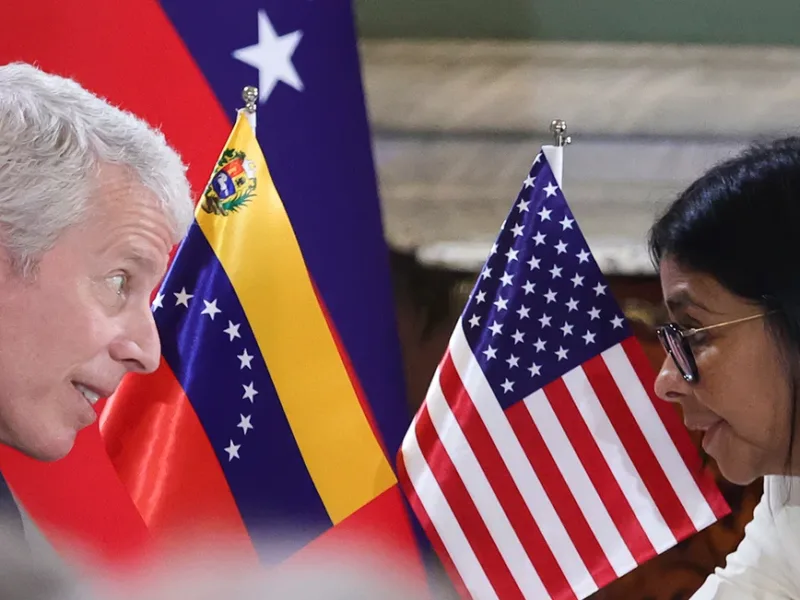
“THE DONROE DOCTRINE”: TRANSFORMATION OF THE US SECURITY POLICY TOWARDS LATIN AMERICA DURING DONALD TRUMP’S SECOND TERM

This article examines the transformation of the US security policy towards Latin America and the Caribbean during Donald Trump’s second presidency, through the concept of the “Donroe Doctrine.” It argues that the administration has combined the traditional logic of the Monroe Doctrine with the principles of America First, strategic competition, and the securitisation of transnational…

Ukraine Analytica 2(40)
0

STRATEGIC STABILITY IN AN ERA OF MULTIPOLAR NUCLEAR COMPETITION

The article examines the transformation of strategic stability in an increasingly multipolar nuclear order. It analyses how the transition from bipolarity has altered traditional concepts of deterrence and strategic stability, and assesses the limitations of Cold War-era theoretical frameworks in explaining contemporary nuclear competition. Particular attention is devoted to the roles of Russia, China, and…

Ukraine Analytica 2(40)
0

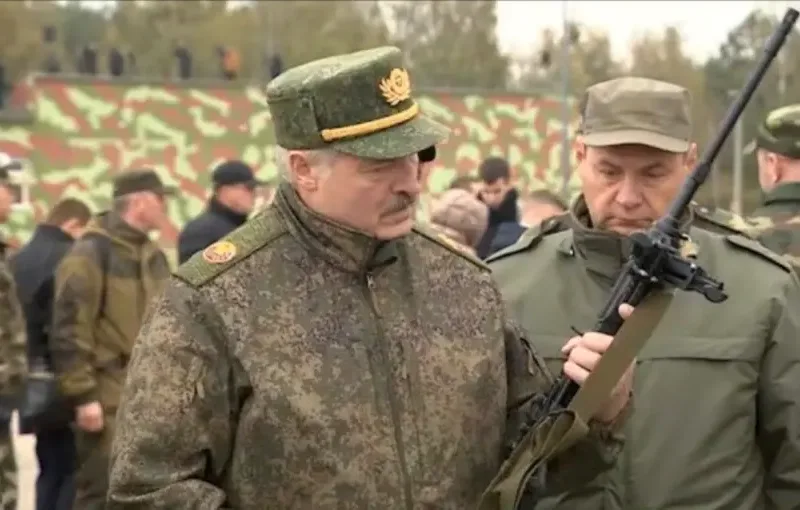
BELARUS’S SUCCESSION PROBLEM AS THE MISSING LINK IN EUROPE’S POST-WAR SECURITY ARCHITECTURE

This article examines Belarus’s place in Europe’s post-war security architecture, tracing Minsk’s geopolitical manoeuvring since Russia’s full-scale invasion of Ukraine. Although Lukashenka has been able to keep the regime afloat, it remains vulnerable, because the system is built around one person and lacks a functioning succession mechanism, which Russia could exploit in the coming transition…

  1. Images are for demo purposes only and are properties of their respective owners. Published by NGO “Promotion of Intercultural Cooperation” (Ukraine), Centre of International Studies (Ukraine),  with the financial support of the Representation of the Friedrich-Ebert-Stiftung in Ukraine, International Renaissance Foundation and RAND Corporation, and the U.S. Department of State

Copyright © 2015-2025 UA: Ukraine Analytica  WEB Design DS STUDIO

online casino malaysia online casino singapore