

Ukraine Analytica 2(40)

UKRAINE AND A NEW EUROPEAN SECURITY ARCHITECTURE: A REVISIT OF THE REGIONAL SECURITY COMPLEX THEORY

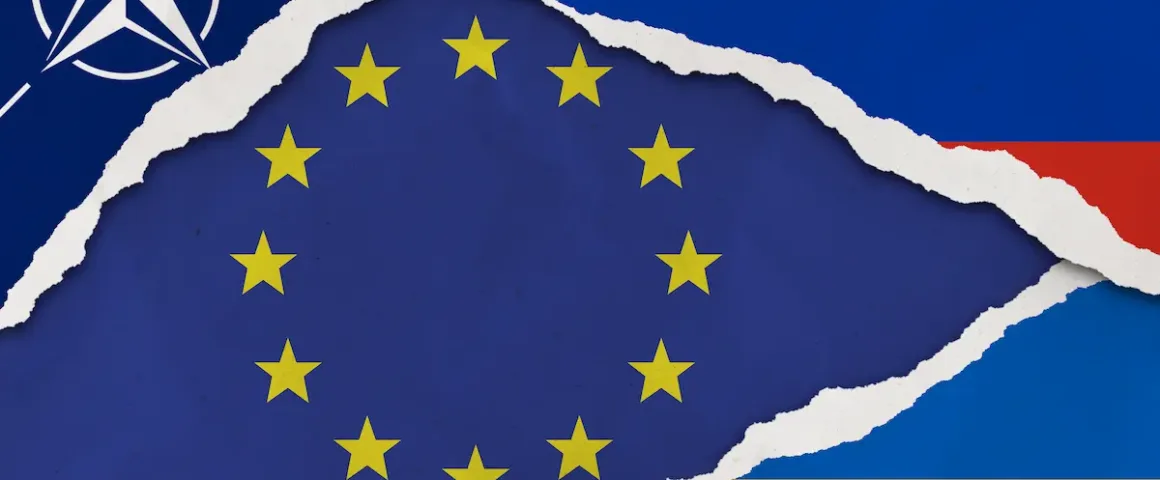
This article applies Buzan and Wæver’s Regional Security Complex (RSC) Theory to the post-2022 transformation of European security. It argues that Russia’s aggression and full-scale invasion sought to eliminate Ukraine’s role as an “insulator state”, fusing the formerly distinct EU-centred and post-Soviet RSCs into a single interdependent super-complex. Its future remains an open securitisation contest: so that averting Russian hegemony depends on sustained Ukraine-EU balancing, expedited Ukrainian EU integration and active transatlantic engagement.

Examining power dynamics on the wider European continent through the prism of the RSC theory reveals that the European regional security complex is currently undergoing a generational shift.


Dmytro Byliev is a second-year MA candidate at the King’s Institute for Applied Security Studies, School of Security Studies, King’s College London. He holds an MA in International Relations from Odessa National University and is an alumnus of the George C. Marshall European Centre for Security Studies’ Program on Irregular Warfare/Hybrid Threats. He has served as a diplomat in different capacities in Kyiv and abroad. His research focuses on international relations and diplomacy, international security, deterrence, and emergent disruptive technologies


  1. Images are for demo purposes only and are properties of their respective owners. Published by NGO “Promotion of Intercultural Cooperation” (Ukraine), Centre of International Studies (Ukraine),  with the financial support of the Representation of the Friedrich-Ebert-Stiftung in Ukraine, International Renaissance Foundation and RAND Corporation, and the U.S. Department of State

Copyright © 2015-2025 UA: Ukraine Analytica  WEB Design DS STUDIO

online casino malaysia online casino singapore